Illinois Paycheck After Taxes: Reading Your Pay Stub Line by Line
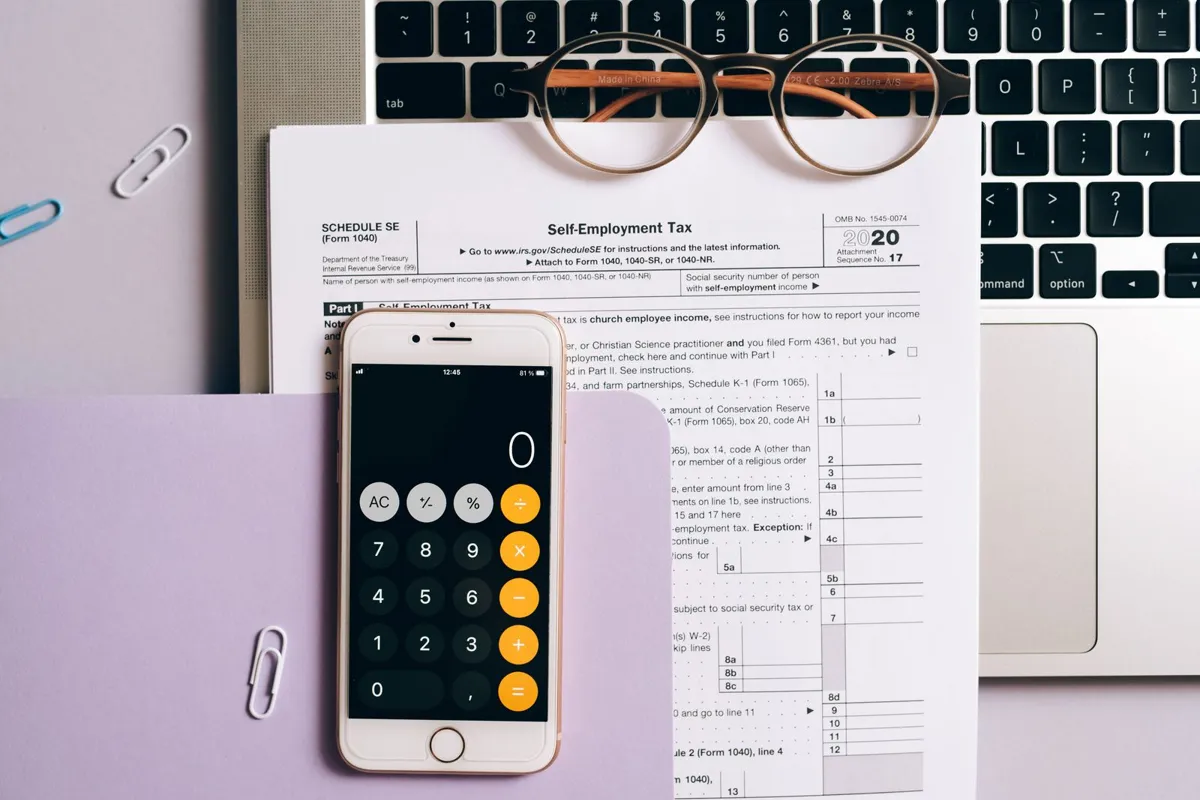
Short answer: on a $55,000 salary in Illinois, a single filer's biweekly paycheck comes to an estimated $1,684 after taxes in 2026, or about $1,825 if you're paid twice a month. Over a year that's about $43,795 in take-home pay.
Every figure here is an estimate from our 2026 tax engine, with no 401(k) or health deductions. Instead of one big yearly number, this post walks through a single paycheck the way it shows up on your stub, so you can check your own.
One biweekly check on $55,000, line by line
Biweekly means 26 paychecks a year. $55,000 ÷ 26 is $2,115.38 of gross pay per check. Here is what comes off it:
| Pay stub line | Per check (estimate) | Per year (estimate) |
|---|---|---|
| Gross pay | $2,115.38 | $55,000.00 |
| Federal income tax | −$170.00 | −$4,420.00 |
| Social Security (OASDI) | −$131.15 | −$3,410.00 |
| Medicare | −$30.67 | −$797.50 |
| Illinois income tax | −$99.14 | −$2,577.71 |
| Net pay | $1,684.41 | $43,794.79 |
Your stub may use slightly different labels. "OASDI" or "FICA-SS" is Social Security. "FICA-Med" is Medicare. "IL SIT" or "State W/H" is the Illinois line.
Worked example: how the Illinois line is figured
Illinois has one flat rate for everyone, 4.95%. But it isn't charged on your full salary. The Illinois Department of Revenue's withholding booklet (IL-700-T) gives each person a basic exemption allowance of $2,925 for 2026.
- Yearly wages: $55,000
- Minus one exemption allowance: $2,925
- Illinois taxable income: $52,075
- Times 4.95%: $2,577.71 a year (estimate)
- Divided by 26 checks: about $99.14 per check
So your effective Illinois rate on $55,000 is about 4.7%, a little under the headline 4.95%. Note that the federal standard deduction ($16,100) does not apply to the Illinois calculation. Illinois uses its own allowance.
The federal lines, briefly
Federal income tax uses the 2026 brackets from IRS Rev. Proc. 2025-32. After the $16,100 standard deduction, $38,900 of the $55,000 is taxable. The first $12,400 is taxed at 10% and the rest at 12%, which gives about $4,420 a year, or $170 per check.
Social Security is 6.2% and Medicare is 1.45% of your pay, per IRS Topic 751. Those two don't get a standard deduction. They apply from the first dollar.
Biweekly vs twice a month
Illinois law requires most employers to pay at least twice a month (the U.S. Department of Labor keeps a table of state payday rules). That gives two common setups:
- Biweekly (26 checks): about $1,684 per check. Two months a year you get three checks.
- Semi-monthly (24 checks): about $1,825 per check, always two a month.
The yearly total is the same. Only the size of each check changes. If you budget monthly, the semi-monthly number is easier to plan around. On a biweekly schedule, plan with two checks a month and treat the third as extra.
Why your real stub might not match
A few common reasons your check comes in lower than the estimate:
- Health, dental or vision premiums. These usually come out before tax and can be $50 to several hundred dollars per check depending on your plan.
- 401(k) contributions. These lower federal income tax but not Social Security or Medicare.
- Your Illinois Form IL-W-4. If you claimed fewer allowances, more state tax comes out each check. If you claimed more, less does.
- Your federal Form W-4. Extra withholding on Step 4(c) comes straight off each check.
- Your first check. It may be prorated or delayed. Our post on why a first paycheck is so low covers this.
Frequently Asked Questions
Does Chicago or my city take income tax too? Our calculator doesn't add any local income tax for Illinois, and the state's withholding booklet covers only the state tax. Check your stub. If you see a local line, ask your payroll team what it is.
Is Illinois' 4.95% rate the same at every income? Yes. Illinois has a flat rate, so a raise is taxed at the same 4.95% at the state level.
What's the best Illinois tax calculator? Pick one that shows 2026 numbers and its sources. Ours lists the IDOR booklet and IRS tables under each result. To check your W-4 specifically, the IRS Tax Withholding Estimator is free.
Check your own paycheck
Type in your salary, pay schedule and any pre-tax deductions in the Illinois take-home pay calculator and compare the result with your latest stub.
Sources
- Illinois Department of Revenue, Booklet IL-700-T, 2026 (4.95% rate, $2,925 exemption allowance)
- IRS, Rev. Proc. 2025-32 (2026 brackets and standard deduction)
- IRS, Topic 751: Social Security and Medicare withholding rates
- U.S. Department of Labor, State Payday Requirements
- IRS, Tax Withholding Estimator
All dollar figures are estimates from the myuscareerpath.com 2026 tax engine (single filer, no pre-tax deductions, biweekly = yearly ÷ 26, semi-monthly = yearly ÷ 24).
Weekly salary tips
One short email a week on pay, offers and taxes in the U.S. No spam; unsubscribe anytime. See our privacy policy.